/

What is Coral Bleaching?

サンゴの白化とは

Understanding what happens when corals turn white.

白いサンゴを見たとき、何が起きているのか。

Is a white coral dead? 白いサンゴは死んでいるのか

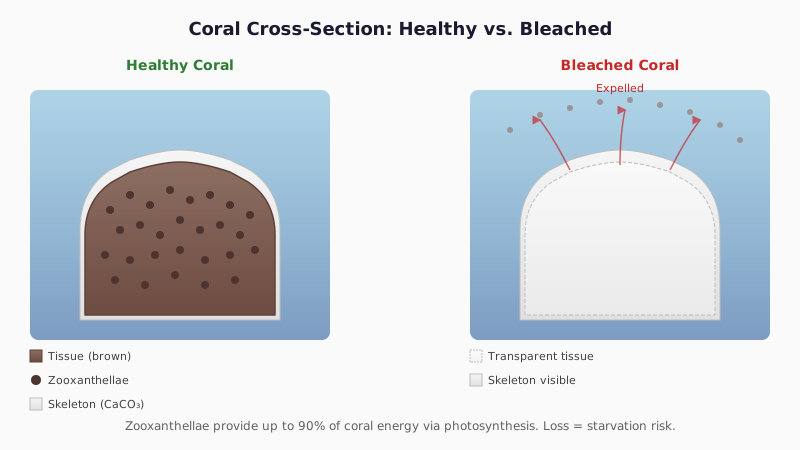
Corals get their color from tiny algae called zooxanthellae (Symbiodiniaceae) living inside their tissues. These algae provide up to 90% of the coral's energy through photosynthesis. When corals become stressed, they expel these algae. Without the brown pigments of the algae, the coral's transparent tissue reveals the white skeleton beneath.

サンゴの色は、組織内に共生する褐虫藻(Symbiodiniaceae)に由来する。褐虫藻は光合成によってサンゴのエネルギーの最大90%を供給している。サンゴがストレスを受けると、この褐虫藻を放出する。褐色の色素を失ったサンゴは、透明な組織を通して白い骨格が透けて見える。これが「白化」である。

Bleaching ≠ Death. A bleached coral is stressed, but still alive. The skeleton remains living tissue. If conditions improve, it can recover.

白化 ≠ 死。 白化したサンゴはストレス状態にあるが、まだ生きている。骨格は生きた組織である。環境が改善すれば、回復の可能性がある。
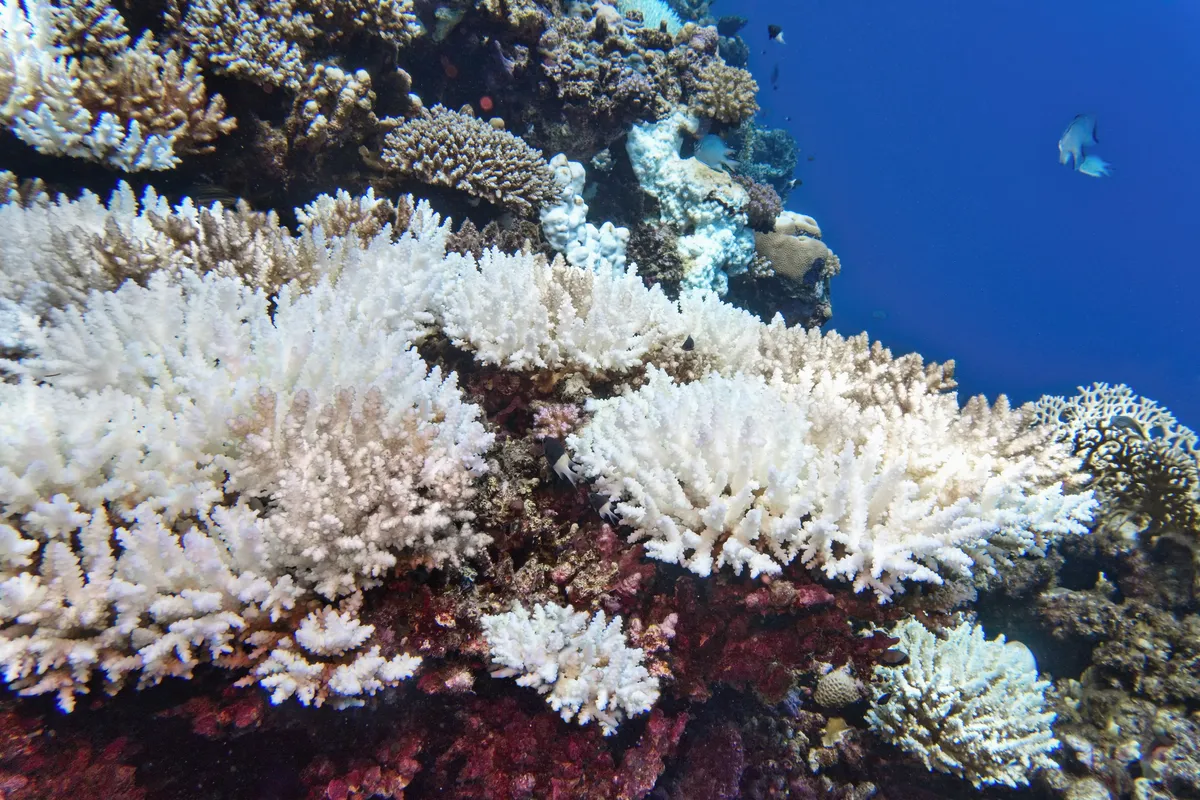
Bleached Acropora corals on a reef
Bleached Acropora colonies. The white corals have lost their zooxanthellae but are still alive. Note the contrast with healthy brown corals in the background. 白化したミドリイシ群体。白いサンゴは褐虫藻を失っているが、まだ生きている。背景の健康な茶色いサンゴとの対比に注目。
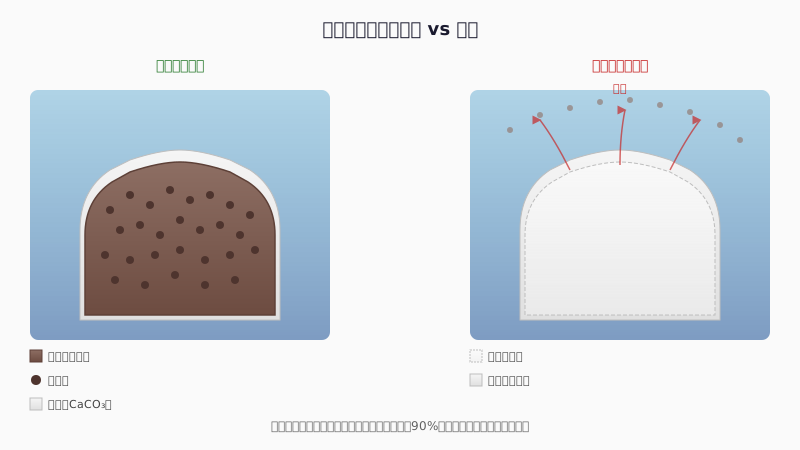
Cross-section diagram comparing healthy and bleached coral健康なサンゴと白化サンゴの断面図
Cross-section of coral polyp. Left: Healthy coral with zooxanthellae (brown dots) in tissue. Right: Bleached coral—zooxanthellae expelled, transparent tissue reveals white skeleton. サンゴポリプの断面図。左:褐虫藻(茶色の点)を含む健康なサンゴ。右:白化サンゴ—褐虫藻が放出され、透明な組織から白い骨格が透けて見える。

What stresses corals? 何がサンゴを追い詰めるのか

High water temperature is the most common cause of mass bleaching events, but it is not the only stressor. Corals can bleach from various environmental pressures:

高水温は大規模白化の最も一般的な原因だが、唯一のストレス要因ではない。サンゴはさまざまな環境圧力によって白化しうる:

🌡️
High temperature 高水温
MMM +1°C for 4 weeks 平年最高+1℃が4週間
☀️
Intense light 強光
UV + heat = worst 紫外線+高温が最悪
❄️
Low temperature 低水温
Below 18°C 18℃以下
🌧️
Low salinity 低塩分
Heavy rain, river runoff 大雨・河川流入
🏜️
Turbidity change 濁度変化
Sediment, red soil 土砂・赤土
🧪
Pollutants 汚染物質
Herbicides, pesticides 除草剤・農薬

Combined stress is the most dangerous. High temperature + intense light together cause far more damage than either alone.

複合ストレスが最も危険。 高水温+強光の組み合わせは、単独のストレスよりもはるかに大きなダメージを与える。

Glowing corals: pink and purple ピンクや紫に光るサンゴ

During bleaching events, some corals display vivid fluorescent colors—pink, purple, blue, or bright yellow—instead of simply turning white. This is not a sign of imminent death. It is a defense mechanism.

白化の過程で、単に白くなるのではなく、鮮やかな蛍光色——ピンク、紫、青、鮮やかな黄色——を発するサンゴがいる。これは死の前兆ではない。防御反応である。

Corals produce fluorescent proteins that act as a natural "sunscreen." When zooxanthellae density drops, light intensity inside the coral tissue increases dramatically. The fluorescent proteins absorb excess light, protecting any remaining algae from further damage.

サンゴは蛍光タンパク質を産生する。これは天然の「日焼け止め」として機能する。褐虫藻の密度が低下すると、サンゴ組織内の光強度は劇的に増加する。蛍光タンパク質は過剰な光を吸収し、残った褐虫藻をさらなるダメージから守る。

A glowing coral is still fighting. Fluorescent colors indicate the coral is actively trying to protect its remaining symbionts. These corals often have better recovery potential.

光っているサンゴは、まだ戦っている。 蛍光色は、サンゴが残った共生藻を積極的に守ろうとしている証拠である。このようなサンゴは回復の可能性が比較的高い。

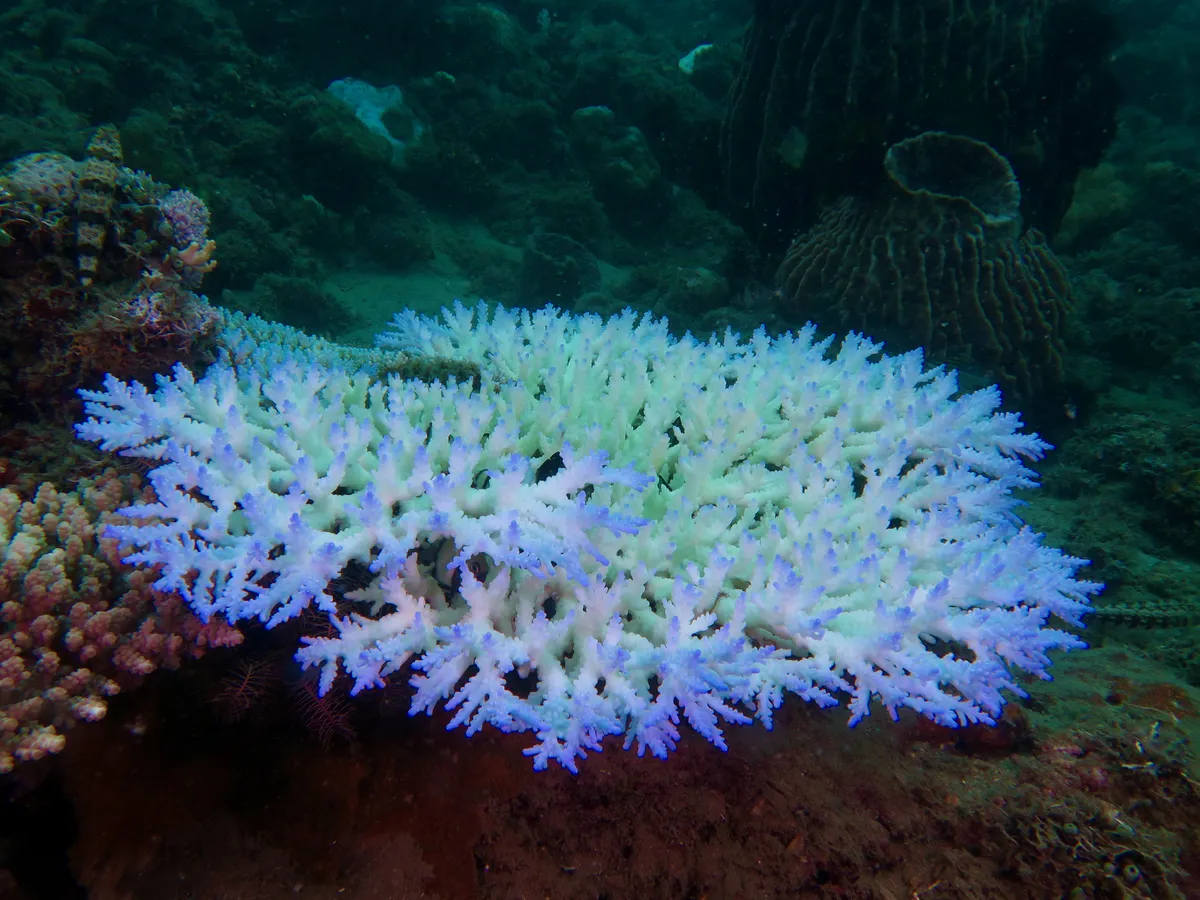
Fluorescent bleaching coral with blue-purple tips
Bleaching Acropora displaying fluorescent blue-purple coloration at branch tips—a sign the coral is actively producing protective pigments. 枝先が蛍光の青紫色を呈する白化中のミドリイシ。保護色素を産生している証拠。

Recovery or death 回復か、死か

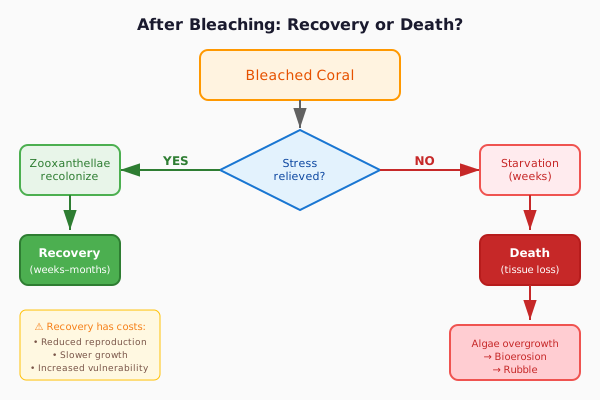
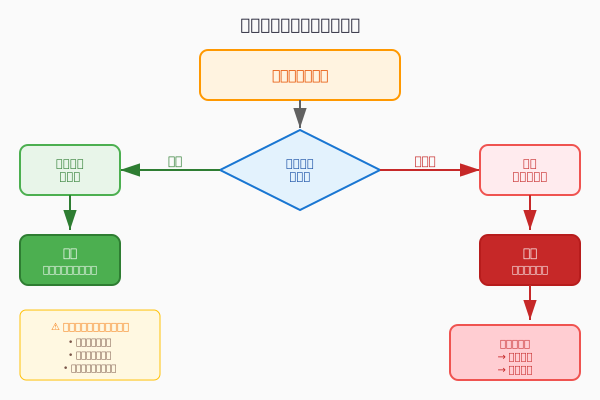
The fate of a bleached coral depends on whether stress conditions ease in time. There are two divergent paths:

白化したサンゴの運命は、ストレス条件が適時に緩和されるかどうかで決まる。道は二つに分かれる:

Recovery

回復

  • Temperature drops
  • 水温が下がる
  • Zooxanthellae recolonize
  • 褐虫藻が再定着
  • Color returns in weeks to months
  • 数週間〜数ヶ月で色が戻る

Death

死亡

  • Stress continues
  • ストレスが継続
  • Starvation within weeks
  • 数週間で餓死
  • Skeleton exposed → algae overgrowth → collapse
  • 骨格露出→藻類被覆→崩壊

Recovery has a cost. Even corals that survive bleaching show reduced reproductive capacity—one study found a 21% decrease in population-level reproductive output. The Great Barrier Reef has seen complete recovery in only 23% of recorded disturbance events.

回復にはコストがある。 白化を生き延びたサンゴでも、繁殖能力は低下する。ある研究では、個体群レベルの繁殖出力が21%低下した。グレートバリアリーフでは、記録された撹乱イベントの23%のみが完全に回復している。

Flowchart showing recovery vs mortality paths after coral bleaching 白化後の回復と死亡の分岐フローチャート

After death: what happens to the skeleton 死後:骨格はどうなるか

Days to weeks
数日〜数週間
White skeleton exposed (recently dead)
白い骨格が露出
Weeks to months
数週間〜数ヶ月
Algae overgrowth (brown/green)
藻類が被覆(茶・緑色)
Months to years
数ヶ月〜数年
Bioerosion → structural collapse
生物侵食→構造崩壊

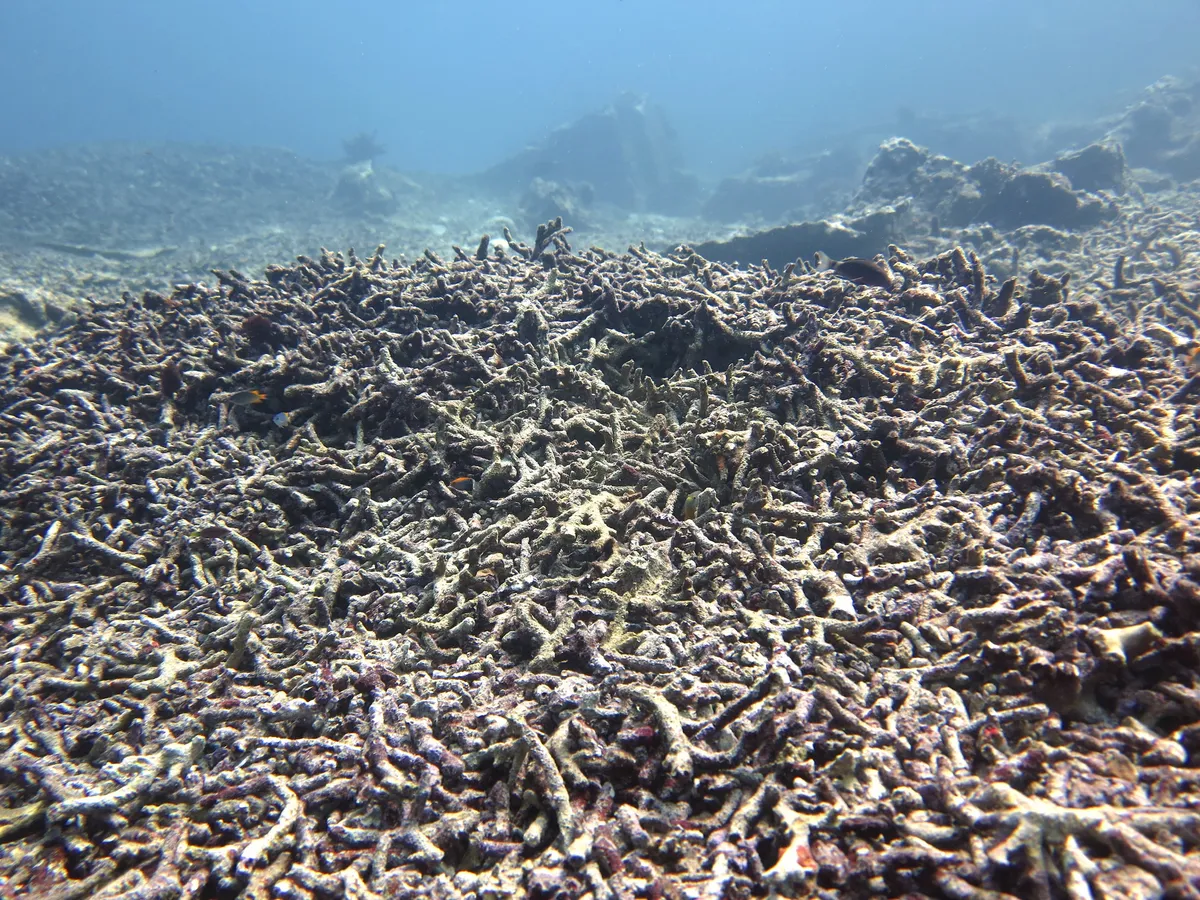
Algae overgrowth prevents new coral larvae from settling. Bioerosion by sponges, worms, and boring algae gradually breaks down the skeleton into rubble and sand. The loss of three-dimensional structure means fish and other reef inhabitants lose their habitat.

藻類の過繁茂は、新たなサンゴ幼生の着生を阻害する。海綿、多毛類、穿孔藻類による生物侵食は、骨格を徐々に砕片と砂へ分解する。立体構造の喪失は、魚類やその他のサンゴ礁生物の生息地の消失を意味する。

Dead coral rubble covered with algae
Dead coral rubble. Months to years after mortality, the skeleton breaks down into fragments covered by algae. The loss of three-dimensional structure eliminates habitat for fish and invertebrates. 死んだサンゴのガレ場。死後数ヶ月〜数年で骨格は藻類に覆われた砕片に崩壊する。立体構造の喪失は魚類や無脊椎動物の生息地を奪う。

Is there hope? 希望はあるのか

Recent research offers cautious optimism:

最近の研究は、慎重ながらも楽観的な知見を示している:

  • Thermal tolerance is rising. Coral assemblages in the Pacific showed thermal tolerance increasing at ~0.1°C per decade (Lachs et al. 2023, Nature Communications). 熱耐性は上昇している。 太平洋のサンゴ群集は、10年あたり約0.1℃の熱耐性上昇を示した(Lachs et al. 2023, Nature Communications)。
  • Adaptation has genetic potential. Heritability of thermal tolerance traits is high (h² > 0.5), suggesting greater adaptive capacity than previously assumed (Bairos-Novak et al. 2021, Global Change Biology). 適応の遺伝的余地がある。 熱耐性に関わる形質の遺伝率は高く(h² > 0.5)、従来想定されていたより適応能力が高い可能性がある(Bairos-Novak et al. 2021, Global Change Biology)。
  • Deep reefs offer partial refuge. At 40m depth, bleaching was 40% vs. 60–69% in shallows—but protection is temporary and limited (Frade et al. 2018, Nature Communications). 深場は部分的な避難所となりうる。 水深40mでの白化率は40%で、浅場の60〜69%より低い——ただし保護効果は一時的で限定的(Frade et al. 2018, Nature Communications)。

But adaptation alone cannot save reefs under high emissions. Even with rising tolerance, models show adaptation can only delay—not prevent—mass bleaching if emissions continue unabated. The window for coral survival depends on how quickly we reduce carbon emissions.

しかし、高排出シナリオでは適応だけでサンゴ礁を救うことはできない。 熱耐性が上昇しても、排出削減がなければ大規模白化を遅らせることはできても、防ぐことはできない。サンゴの生存の窓は、排出削減の速度にかかっている。

Key References 主要文献

  • Bairos-Novak KR, et al. (2021). Coral adaptation to climate change: Meta-analysis reveals high heritability across multiple traits. Global Change Biology.
  • Bollati E, et al. (2020). Optical Feedback Loop Involving Dinoflagellate Symbiont and Scleractinian Host Drives Colorful Coral Bleaching. Current Biology.
  • Briggs ND, et al. (2024). Dissecting coral recovery: bleaching reduces reproductive output in Acropora millepora. Coral Reefs.
  • Diaz-Pulido G, et al. (2009). Doom and Boom on a Resilient Reef: Climate Change, Algal Overgrowth and Coral Recovery. PLoS ONE.
  • Emslie MJ, et al. (2024). Increasing disturbance frequency undermines coral reef recovery. Ecological Monographs.
  • Frade PR, et al. (2018). Deep reefs of the Great Barrier Reef offer limited thermal refuge during mass coral bleaching. Nature Communications.
  • Helgoe J, et al. (2024). Triggers, cascades, and endpoints: connecting the dots of coral bleaching mechanisms. Biological Reviews.
  • Lachs L, et al. (2023). Emergent increase in coral thermal tolerance reduces mass bleaching under climate change. Nature Communications.